 Merken
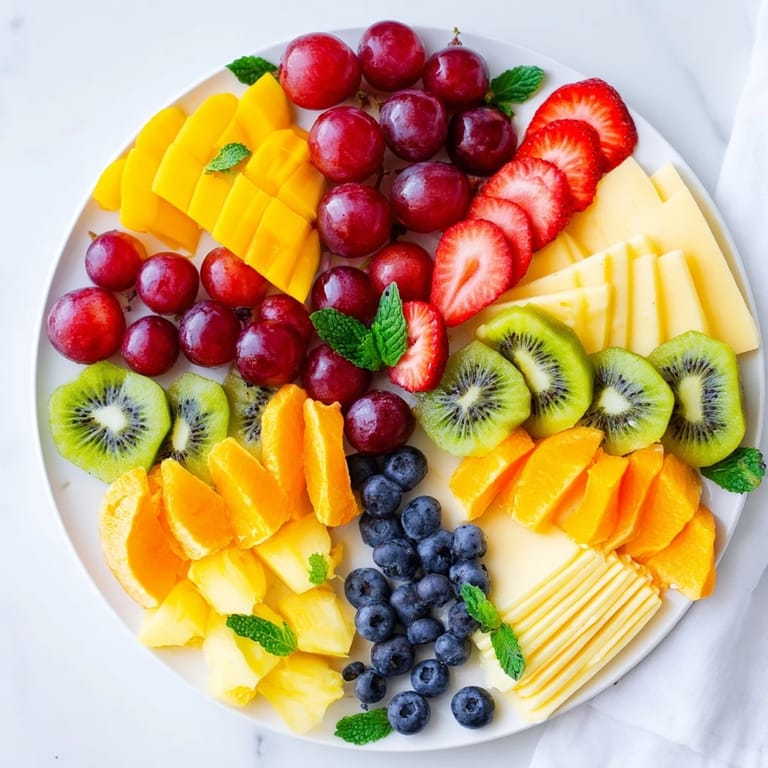
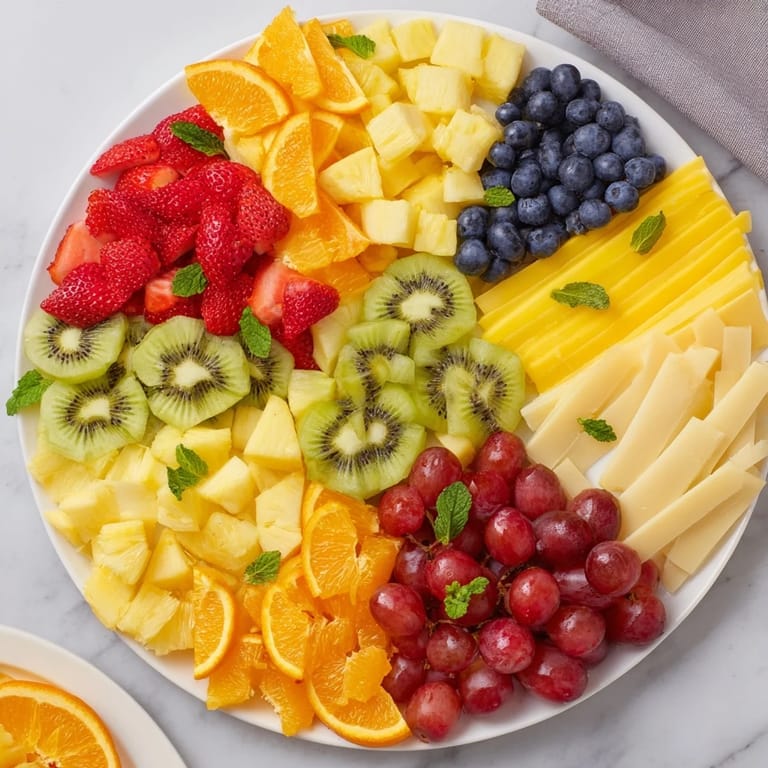
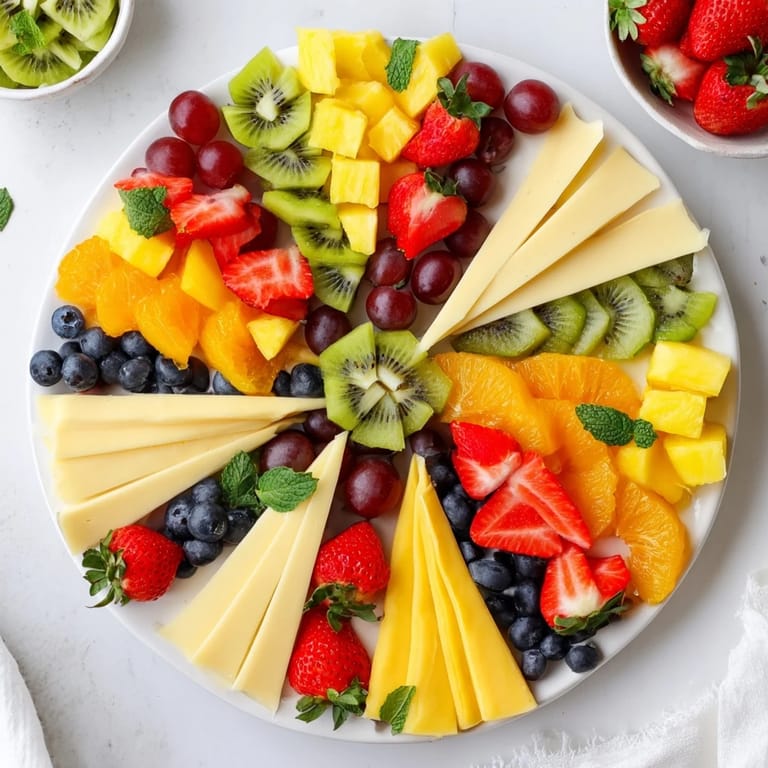
 The first time I arranged fruit and cheese into a circular pattern, I wasn't trying to make anything fancy—I just had a round board, an abundance of colorful produce, and the vague idea that if I kept alternating colors, something beautiful might happen. Three hours later, my guests walked into the kitchen and actually gasped. That moment taught me that the most impressive dishes aren't always the most complicated; sometimes they're just about seeing what's already in front of you and giving it a little intentional structure. The Kaleidoscope Circle became my go-to whenever I wanted to feel like I'd done something magical with minimal effort.
I remember bringing one of these to a summer gathering where everyone was stressed about bringing the "right" dish, and I just showed up with this colorful platter. What surprised me wasn't the compliments—it was how people kept gravitating back to it, not just to eat, but to look at it. Something about the symmetry and color made people slow down and actually enjoy the moment instead of rushing to the next thing.
Ingredients
- Seedless red grapes: They hold their shape beautifully and create perfect ruby-colored segments that catch the light.
- Fresh strawberries: Always use firm ones—the soft berries will weep juice and ruin your color contrast within an hour.
- Kiwi: Slice these last and keep them covered with plastic wrap until the final moment, or they'll oxidize and lose their vibrant green.
- Pineapple: Cut it into small, uniform wedges so each segment feels intentional rather than chunky.
- Blueberries: These are your gap-fillers and your secret color heroes—they make everything else pop.
- Orange: The segments add a cheerful brightness and a pop of citrus aroma that makes the whole platter feel fresh.
- Aged cheddar: Its deep golden color provides warmth and richness against the bright fruit; the slight sharpness balances the sweetness.
- Manchego: This Spanish cheese adds a pale, creamy tone that creates beautiful contrast and has a nutty flavor that complements fruit perfectly.
- Brie: Its soft texture and pale appearance make it almost delicate in the pattern, and it's the most crowd-pleasing cheese on the board.
- Goat cheese: The tangy brightness cuts through sweetness and its snowy white color is essential for visual balance.
- Fresh mint: A few leaves scattered at the end add green accents and make the whole thing feel intentional and elegant.
Tired of Takeout? 🥡
Get 10 meals you can make faster than delivery arrives. Seriously.
One email. No spam. Unsubscribe anytime.
Instructions
- Gather and prepare your cast of characters:
- Wash, peel, and cut everything into matching wedges—consistency is what makes the pattern work. I like to lay out small bowls of each ingredient so I can see exactly what I'm working with and grab pieces quickly.
- Slice cheeses with intention:
- Use a sharp knife and take your time; clean cuts make the difference between a rustic board and a stunning centerpiece. Cheddar and manchego slice cleanly with downward pressure, while brie benefits from a knife dipped in warm water between cuts.
- Start at the center or edge:
- Choose your starting point—I prefer beginning at the outer edge and spiraling inward because it feels more controllable. Place your first fruit wedge, then alternate with cheese, then move to the next fruit variety, repeating the pattern as you work around.
- Build your concentric circles:
- Each ring should have the same sequence of colors and shapes, which is what creates that mesmerizing kaleidoscope effect. Step back and look at it from above every few minutes to make sure the symmetry is holding.
- Fill the gaps with purpose:
- Blueberries and grapes are your friends here—use them to fill any awkward spaces and enhance the color rhythm. This is also where you can fix any sections that feel unbalanced.
- Add your finishing touch:
- Scatter a few mint leaves across the platter just before serving; it adds a whisper of green and signals that this is fresh and thoughtfully made.
 Merken
 There's something almost meditative about arranging this platter—the repetition, the colors coming together, watching something chaotic become symmetrical. A friend once told me she felt less anxious just looking at it, and I realized that food can be comfort before anyone even takes a bite.
The Magic of Color and Contrast
The real trick to making this work isn't precision—it's understanding which colors make each other sing. The deep red grapes next to pale goat cheese create drama, while the yellow pineapple brightens up the rich cheddar. Think of it like an artist's palette where every choice either supports or disrupts the whole picture. When you nail it, even people who say they don't care about presentation will stop and look.
Timing and Temperature
The best moment to serve this is right after assembly, when the fruit is cold and crisp and the cheeses haven't started to soften and blur at the edges. If you need to make it ahead, cover it loosely with plastic wrap and refrigerate—but remove it about fifteen minutes before guests arrive so the cheeses aren't ice-cold and hard. Room temperature brings out the flavor of the cheese and makes the whole experience better.
Beyond the Classic: Variations and Pairings
Once you've mastered the basic kaleidoscope, you can swap in whatever's at the farmer's market or whatever you're craving—stone fruits in summer, pomegranate in winter, different cheeses based on mood or season. I've made versions with olives and roasted almonds for a savory twist, and once I added candied nuts for a friend's birthday and it became the highlight of the meal. The structure stays the same, but the possibilities are endless—that's what makes this formula so powerful.
- Pair it with sparkling wine or a crisp Sauvignon Blanc to elevate the whole experience.
- Try adding honeycomb pieces or a drizzle of hot honey for sweetness and complexity.
- Make it ahead until the final mint garnish; add that just before guests arrive for maximum impact.
 Merken
 This platter reminds me that sometimes the most memorable dishes are the ones that make people feel something—whether that's awe at the presentation or just the simple joy of beautiful food shared with people who matter. Make it, serve it with confidence, and watch what happens.
Häufige Fragen zum Rezept
- → Welche Früchte eignen sich am besten für das Kaleidoskop?
Ideal sind farbenfrohe und festere Früchte wie Trauben, Erdbeeren, Kiwi, Ananas, Blaubeeren und Orangen, die sich gut in gleichmäßige Stücke schneiden lassen.
- → Wie schneidet man den Käse für die Anordnung richtig?
Käse sollte in kleine, gleichmäßige Dreiecke oder Scheiben geschnitten werden, damit sie gut neben den Fruchtstücken liegen und ein harmonisches Muster bilden.
- → Kann man das Muster im Voraus zubereiten?
Das Anrichten sollte möglichst kurz vor dem Servieren erfolgen, damit die Früchte frisch bleiben und keine Feuchtigkeit das Arrangement beeinträchtigt.
- → Welche Garnituren passen zu dem Obst-Käse-Teller?
Frische Minzblätter eignen sich besonders gut für eine optische Aufwertung und angenehmen Duft. Auch geröstete Nüsse oder Oliven können ergänzt werden.
- → Für welche Anlässe ist diese Zusammenstellung geeignet?
Ideal für elegante Treffen, festliche Empfänge oder als auffällige Vorspeise auf Partys und Buffets.