 Merken
 There's a particular Tuesday evening I think about whenever I make risotto, not because it was special, but because it wasn't. I'd come home with a bag of cremini mushrooms I couldn't resist at the market, and instead of the usual pasta, I decided to attempt something that seemed far more complicated than it actually was. The first time the rice began to transform—going from hard little kernels to something creamy and alive under the constant stirring—I realized this wasn't a dish you made; it was a dance you did with your ingredients.
I made this for my partner on a rainy Saturday, and what struck me most wasn't the creamy texture or even how good it smelled—it was watching someone take that first bite and just close their eyes. No words, just presence. That's when I understood that risotto isn't really about technique; it's about the willingness to stand at the stove and pay attention to something.
Ingredients
- Arborio rice (1 ½ cups): This short, starchy grain is the backbone of risotto; its high starch content creates creaminess without cream.
- Cremini or button mushrooms (12 oz, sliced): They release a subtle umami that deepens the entire dish—don't skip the step of cooking them separately first.
- Olive oil (1 tbsp): For sautéing the mushrooms over medium heat.
- Unsalted butter (3 tbsp total): Split between cooking the mushrooms and finishing the risotto; it brings richness and silkiness.
- Yellow onion (1 medium, finely chopped): The flavor foundation; keep the pieces small so they disappear into the rice.
- Garlic (2 cloves, minced): A whisper of garlic, not a shout; one minute is enough so it doesn't burn.
- Vegetable broth (4 cups, kept warm): Temperature matters here—adding cold broth stops the cooking process, so keep it gently steaming.
- Dry white wine (½ cup): Use something you'd actually drink; it adds brightness and acidity that cuts through the richness.
- Parmesan cheese (½ cup grated, plus extra): The final flourish that brings everything into focus.
- Salt and black pepper: Taste as you go; risotto forgives small adjustments but rewards careful seasoning.
- Fresh parsley (2 tbsp, optional): A splash of green at the end, mostly for your own joy.
Tired of Takeout? 🥡
Get 10 meals you can make faster than delivery arrives. Seriously.
One email. No spam. Unsubscribe anytime.
Instructions
- Sauté the mushrooms until golden:
- Heat the olive oil and 1 tablespoon of butter in a large skillet over medium heat. When it's shimmering, add the sliced mushrooms and let them cook without stirring too much—they need to develop a golden crust. This takes about 6 to 8 minutes. You'll know they're ready when any moisture they release has evaporated and they smell deeply savory.
- Build the flavor foundation:
- Remove the mushrooms and set them aside. In the same pan, add the chopped onion and cook gently until it becomes soft and translucent, about 3 minutes. Add the minced garlic and cook for just 1 minute more—you're looking for fragrance, not browning.
- Toast the rice:
- Stir the Arborio rice into the pan with the onions and garlic, stirring constantly for about 2 minutes. You're looking for the edges of the rice grains to become slightly translucent while the centers remain white; this tells you the starch is beginning to release.
- Introduce the wine:
- Pour in the white wine and stir until it's almost completely absorbed into the rice. This moment is important—the acidity of the wine will flavor the rice grains directly.
- The patient rhythm of broth:
- Lower the heat slightly and begin adding the warm vegetable broth one ladleful at a time, stirring frequently. Wait until most of the liquid is absorbed before adding the next ladleful—this constant stirring is what releases the starch and creates the creaminess. This takes about 18 to 20 minutes total. The rice should taste tender but still have a slight firmness at its center (what the Italians call al dente).
- Finish and rest:
- Stir the sautéed mushrooms back into the risotto along with the remaining 2 tablespoons of butter and the grated Parmesan cheese. Cook for just 2 more minutes, then remove from heat immediately. Season to taste with salt and pepper.
- Serve while it's still breathing:
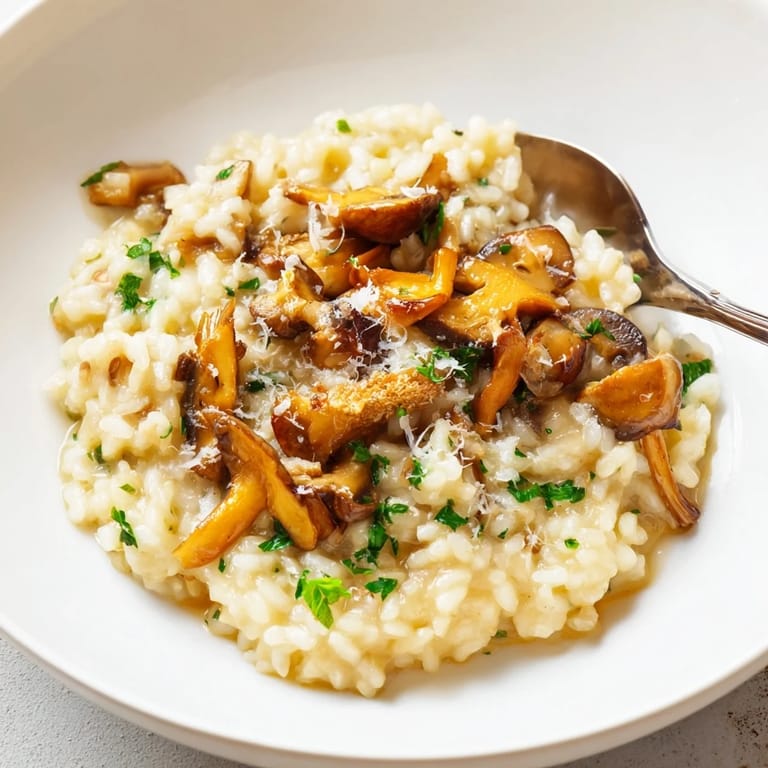
- Spoon into bowls right away and finish with a generous handful of extra Parmesan and fresh parsley if you like. Risotto waits for no one.
 Merken
 I've learned that risotto is less about following steps precisely and more about developing an instinct for what the rice needs. There was a moment, maybe halfway through my third attempt, when I stopped reading and started listening—to the slight sizzle of the liquid being absorbed, to the rhythm of the stirring, to the rice itself telling me when it was ready.
The Art of Stirring
This is where most people think risotto is difficult, but it's actually the opposite. The stirring isn't about effort; it's about presence. You're standing at the stove for about twenty minutes, yes, but that time becomes meditative if you let it. I've found some of my clearest thoughts come while stirring risotto—there's something about the repetitive motion and the watching that quiets the mind. Some people add all the broth at once or use a rice cooker, and while those shortcuts work technically, you miss the entire experience of the dish coming alive under your hand.
Mushroom Variations
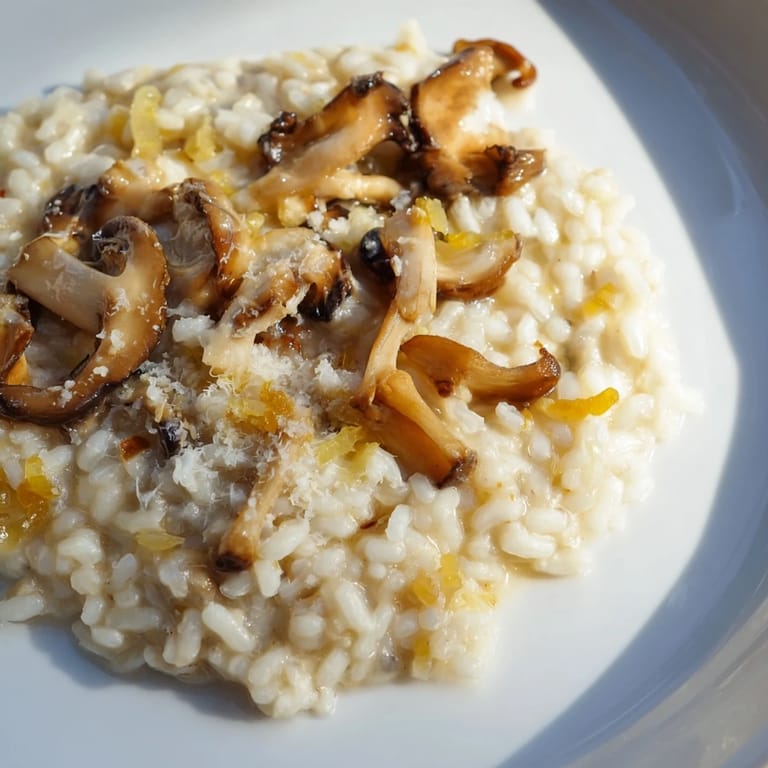
Cremini mushrooms are reliable and delicious, but once you've made this risotto once, you'll want to experiment. A mix of cremini, shiitake, and oyster mushrooms creates a more complex earthiness. In autumn, I seek out chanterelles or porcini (even just a small amount dried and rehydrated adds incredible depth). The technique stays exactly the same—sauté first, set aside, finish at the end—but each type of mushroom tells a slightly different story.
Why This Dish Matters
Risotto bridges a gap I didn't know existed—it's elegant enough for guests, but it's also entirely unpretentious. It's the kind of dish that teaches you something about cooking every time you make it, that rewards your attention without demanding perfection. There's generosity in a bowl of risotto, a sense that someone took the time to make something creamy and warm for you.
- If you're cooking for someone who's had a long day, risotto says everything that needs saying.
- Leftovers can be turned into risotto cakes the next day—pressed cold, panfried until golden, utterly craveable.
- This is the recipe that might just make you understand why people love Italian cooking.
 Merken
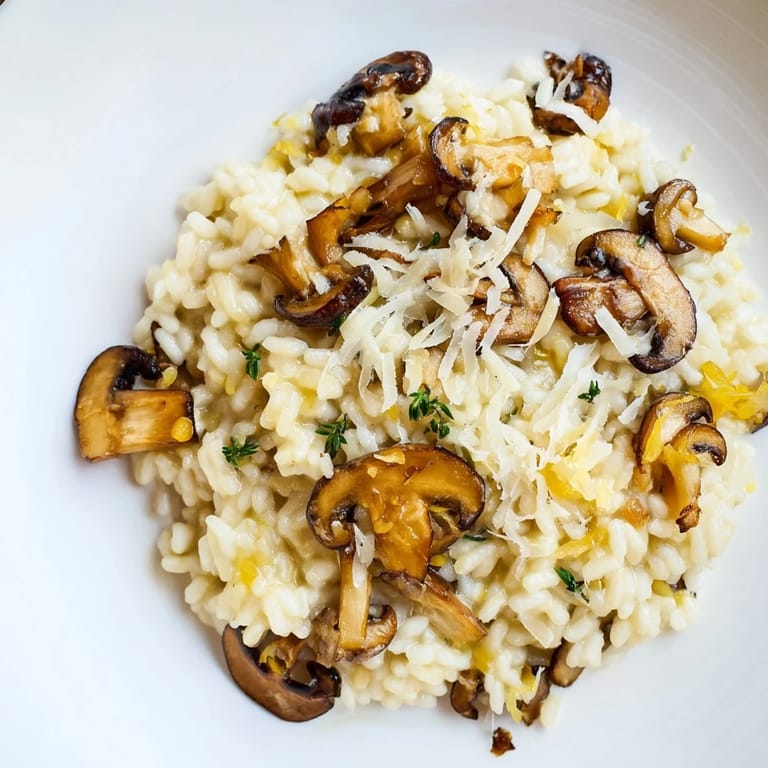
 This risotto with mushrooms has become my answer to so many cooking moments—when I want to impress without stress, when I want comfort that feels considered, when I want to remind myself why I love cooking in the first place. Make it once and you'll understand why people have been stirring risotto with devotion for centuries.
Häufige Fragen zum Rezept
- → Welche Pilzsorten eignen sich am besten?
Cremini oder Champignons sind ideal, können aber durch Waldpilze für intensiveren Geschmack ersetzt werden.
- → Warum wird der Reis zwischendurch mit Brühe aufgegossen?
Das langsame Zugießen ermöglicht eine cremige Konsistenz und sorgt für das perfekte Bissgefühl des Arborio-Reises.
- → Kann man Weißwein durch etwas anderes ersetzen?
Ja, Gemüsebrühe oder Apfelessig sorgen ebenfalls für Geschmack, verändern aber die Aromen leicht.
- → Wie erkenne ich, dass das Risotto fertig ist?
Der Reis soll cremig, aber mit leichtem Biss (al dente) sein und die Flüssigkeit größtenteils aufgenommen haben.
- → Welche Beilagen passen gut zu diesem Gericht?
Ein leichter gemischter Salat oder ein frisches Ciabatta ergänzen das cremige Hauptgericht hervorragend.