 Merken
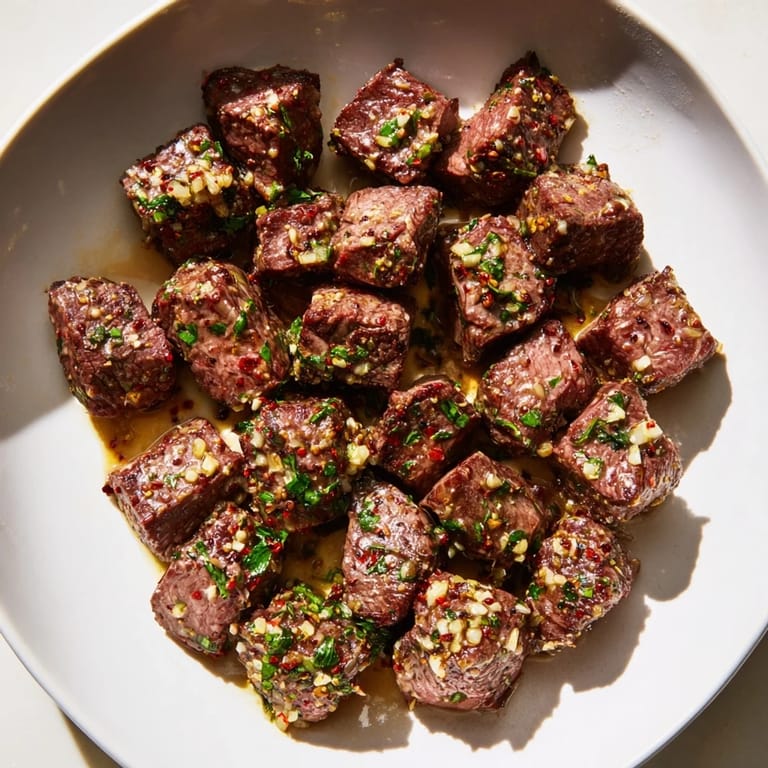
 There's something about the sound of steak hitting a hot skillet that makes everything else disappear. I discovered these garlic butter bites one weeknight when I had about twenty minutes and a hungry kitchen—no fancy techniques, just good beef and the kind of simple alchemy that happens when butter meets heat. The first time I made them, I actually overdid the searing because I couldn't stop listening to that beautiful sizzle, but it taught me something valuable about patience and timing. Now they're my go-to when I want to feel like I'm doing something impressive without the stress.
I made these for my sister's surprise birthday dinner, plated them on her favorite board, and watched her eyes light up when that warm garlic butter pooled across her plate. She kept asking what restaurant I'd ordered from until she realized I'd made them in my own kitchen. That moment—when someone tastes something you made and forgets to be polite about how simple it was—that's when I knew this recipe belonged in my regular rotation.
Ingredients
- Sirloin steak, 1.5 lbs, cut into 1-inch cubes: Sirloin is tender enough to taste buttery but forgiving enough that slight overcooking won't ruin it; I learned this the hard way with pricier cuts.
- Kosher salt, 1 tsp: Use kosher specifically—it dissolves better than table salt and gives you better control over seasoning.
- Black pepper, 1/2 tsp: Grind it fresh right before cooking so you get those little flecks of flavor rather than dull powder.
- Unsalted butter, 3 tbsp: The garlic and heat do all the flavoring, so unsalted keeps you in control—if you only have salted, use a bit less.
- Garlic, 4 cloves, finely minced: Don't use a press unless you like garlic paste; mincing by hand gives you those tiny pieces that distribute perfectly through the butter.
- Fresh parsley, 1 tbsp, chopped: This isn't just garnish—it adds a bright, grassy note that stops the richness from being overwhelming.
- Crushed red pepper flakes, 1/2 tsp optional: Add it if you want a subtle heat that sneaks up on you rather than announcing itself.
- Olive oil, 1 tbsp: For high-heat cooking; it won't burn like butter would at searing temperature.
Tired of Takeout? 🥡
Get 10 meals you can make faster than delivery arrives. Seriously.
One email. No spam. Unsubscribe anytime.
Instructions
- Dry and season your steak:
- Pat each cube completely dry with paper towels—this is how you get that golden crust instead of a steamed surface. Season generously and evenly, making sure every side gets salt and pepper.
- Get your skillet screaming hot:
- Heat your pan over high heat for a solid minute or two until it's almost smoking. This is non-negotiable for that restaurant sear you're after.
- Sear the steak in single-layer batches:
- Add a tablespoon of olive oil, swirl it around, then lay out your steak cubes without crowding—they need room to brown, not steam. Leave them alone for two minutes, resisting the urge to fidget.
- Turn and finish the sear:
- Flip each cube once and let it cook two to three more minutes until golden on all sides. You're going for a caramelized crust and a gentle pink center, though honestly, slight variation here is fine.
- Rest your steak while you build the sauce:
- Transfer the seared cubes to a plate and loosely cover them so they stay warm but steam escapes.
- Make the garlic butter magic:
- Drop the heat to medium-low, add your butter, and let it melt completely. Add your minced garlic and listen—it should start smelling incredible within thirty seconds, but don't let it brown or it turns bitter.
- Finish and serve:
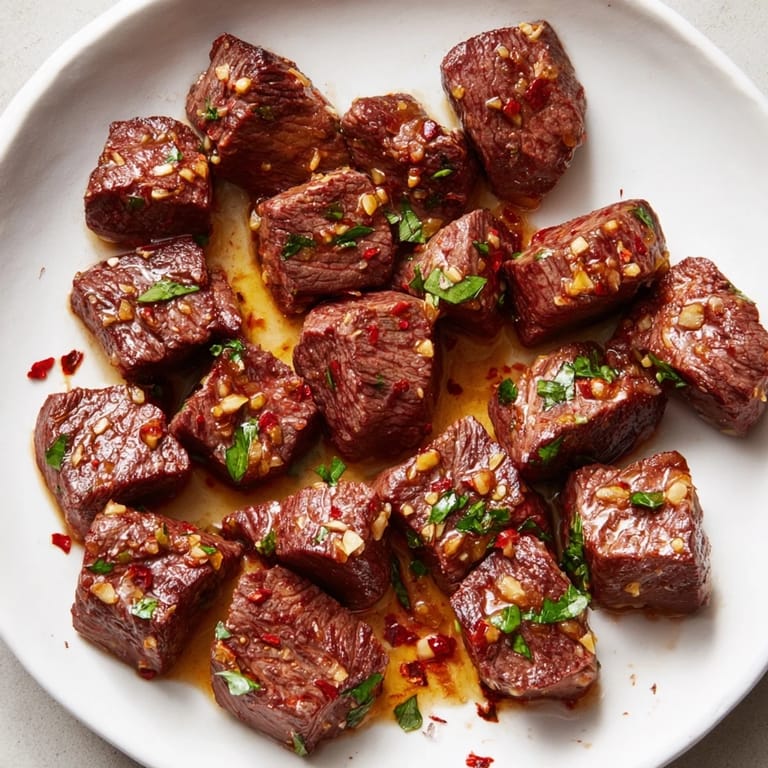
- Return the steak to the pan, toss everything together so every bite gets coated in that golden butter, then shower it with fresh parsley and red pepper flakes if you like a little kick.
 Merken
 My neighbor smelled these cooking one evening and showed up at my door ten minutes later asking what that scent was. We ended up sharing dinner on my porch while the sun was setting, and she told me stories about cooking with her grandmother. Food has a way of doing that—turning an ordinary Tuesday into a moment you actually remember.
Why This Works So Well
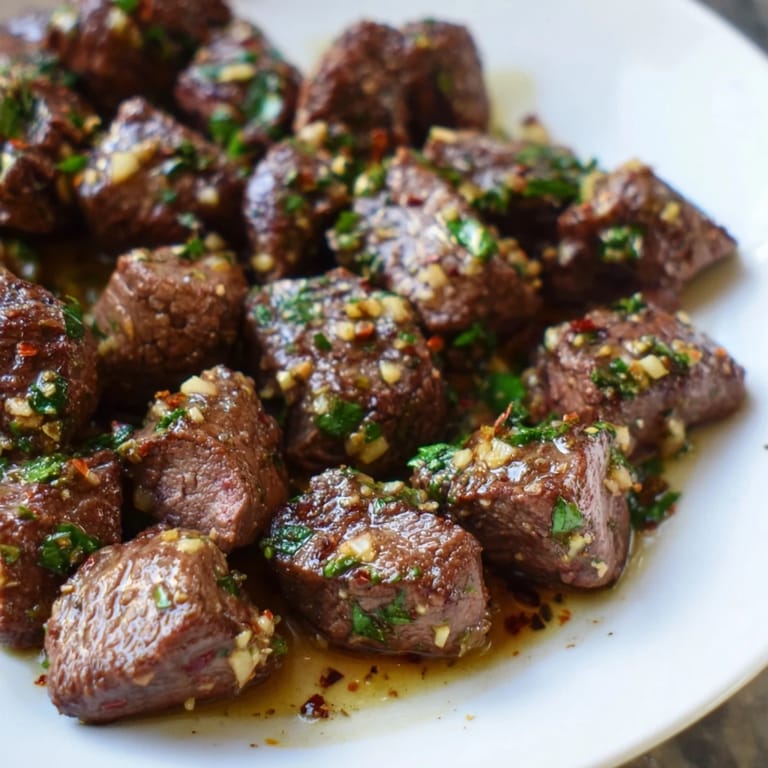
The magic here is in the contrast—you get that crispy, caramelized exterior on the steak meeting a buttery, garlicky sauce that's almost silky. The heat from the pan does the work for you; you're not wrestling with complicated techniques or worrying about doneness throughout a long cook. The parsley adds color and a fresh bite that cuts through the richness, so you don't feel overwhelmed after eating a few bites.
Serving Ideas Beyond the Basics
These steak bites are genuinely versatile in ways that surprised me. I've served them over creamy mashed potatoes, tossed into a green salad with the pan sauce as dressing, piled on toasted bread for an elevated open-faced sandwich, or even cold the next day (if any leftovers make it that far). A few times I've added a splash of balsamic vinegar or Worcestershire to the pan during the garlic stage, which deepens everything without changing the core simplicity.
The Small Tricks That Make a Difference
Temperature control separates good sears from great ones—you want that initial high heat to lock in crust, then a gentler medium-low for the garlic so it perfumes the butter without burning. I also learned that resting the steak, even for a minute under a loose cover, helps keep it tender rather than drying it out while you're building the sauce. The pan itself matters too; cast iron holds heat better than stainless steel, so if you have it, use it.
- A squeeze of fresh lemon juice stirred in at the very end brightens the whole dish without making it taste citrusy.
- If you have truffle oil or fancy finishing salt, a tiny drizzle or sprinkle after plating feels luxurious without changing the core recipe.
- Leftovers actually improve the next day—the flavors marry overnight, so don't hesitate to make extra.
 Merken
 These steak bites remind me that some of the best meals don't require hours or a long ingredient list—just good timing, good heat, and ingredients that taste like themselves. I hope they become one of those recipes you make again and again, especially when you want to feel like you've done something special.
Häufige Fragen zum Rezept
- → Wie erreiche ich perfekte Garstufen bei Steakwürfeln?
Für medium-rare Steakwürfel empfiehlt es sich, diese bei starker Hitze jeweils 2-3 Minuten zu braten, damit sie außen knusprig sind und innen zart bleiben.
- → Kann ich die Butter durch eine andere Fettquelle ersetzen?
Butter verleiht der Sauce ihr typisches Aroma, aber Olivenöl oder Ghee können alternativ verwendet werden, wobei der Geschmack sich leicht verändert.
- → Wie gelingt der Knoblauch, ohne zu verbrennen?
Knoblauch sollte bei mittlerer Hitze nur kurz (ca. 30 Sekunden) in der Butter sautiert werden, um Aroma freizusetzen ohne Bitterkeit durch Verbrennen.
- → Welche Alternative gibt es zum Sirloin-Steak?
Ribeye oder New York Strip Steak eigenen sich ebenfalls gut für diese Zubereitung und bieten unterschiedliche Geschmacksnuancen.
- → Wie bewahre ich Steakwürfel nach dem Braten am besten auf?
Decken Sie die gebratenen Steakwürfel locker ab, um sie warm zu halten und den Saft zu bewahren, bis sie serviert werden.